Wednesday, 11 August 2010

Segregating the Chickens

The fences around Church Farm's chicken enclosures serve many purposes. While the chickens themselves are free to roam large sections of the woodland within their bounds, the chicken wire ensures that they never wander too far away and that predators such as foxes can't attack them during the night.

It also helps to segregate the roosters from the hens. However, some of the roosters have developed a knack for jumping the fence and escaping into the adjacent enclosures. This is even more of a problem than it may at first seem – surrounded by potential mates, the overly vigorous roosters actually pose a threat to the hens. Several have been found dead as a result of too much aggressive attention.
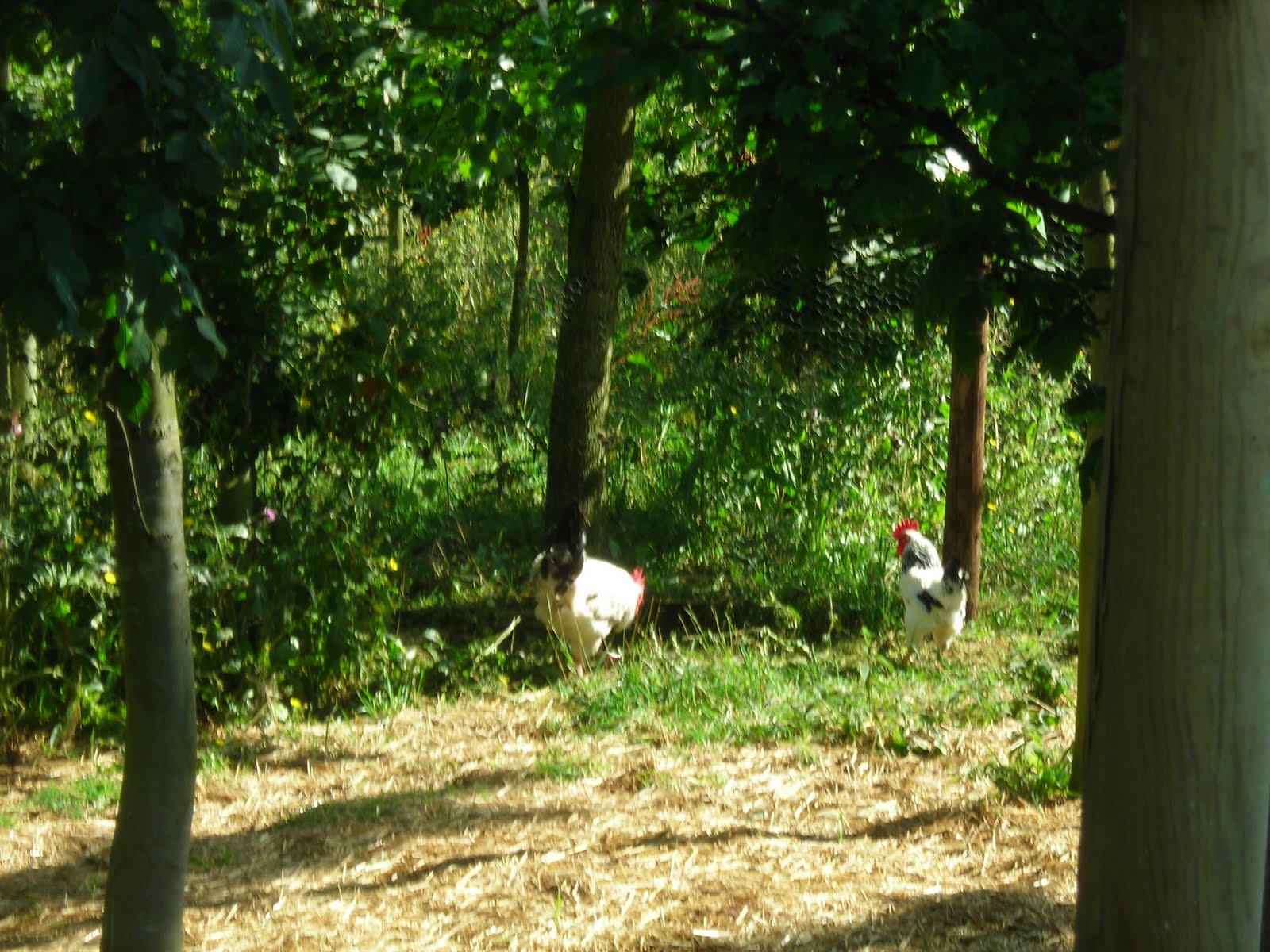
In order to contain the them, a new six-foot fence is being erected around one of the enclosures. This is no simple task; these are free range chickens and the perimeter of even the smallest enclosure comes close to 80 yards. Knocking in new fence posts and suspending that much chicken wire is a laborious job that will take two men the best part of a week to complete even for a single plot.

This is a particularly pain at the moment because we have a temporary shortage of labour. Much better to complete it now, however, because the winter brings its own problems. Plus, who wants to be putting up a fence in November? There's something satisfying about building a fence, anyway; you can leave something lasting before moving onto the next task.

Monday, 26 July 2010

A video about Rural Care

Farm News: 23/07/10


Farm
• The new calf born in the last week is doing well. In the first few days, the mothers "park" their calves whilst they go off to graze, usually at the edge of fields or in long grass. It constantly amazes us how both mother and offspring know
exactly what to do.
• This week saw the arrival of more turkey chicks as well as guinea fowl chicks which are now in the chick shed and stable near the car park.
• For weeks, our Rural Care Co-farmers have been looking after and turning the Church Farm duck eggs in our chick shed. Over the last couple of days, we’ve seen 14 successful hatchlings. Come and have a look when you visit us next!


Store, Café and Veg & Meat Boxes
• Get your sustainable charcoal from the store or order a BBQ box with the butcher.
• Have you seen our new selection of dips?
• A boneless leg of pork is now £5.98/kg instead of £6.18/kg
• Look out for filo pastry with cream cheese and plums in the café.

Events, Workshops and Courses
• Have you booked to come to our Campfire, Music and Sleep Under the Stars Weekend on 24th July?
• Our new summer programme is now online: http://www.churchfarmardeley.co.uk/pdfs/SummerCoursesEvents2.pdf

Rural Care• On Monday, Ann, Emma and Brian from the Rural Care team visited Butterfly Lodge (another Care Farm in Colchester) to share ideas and experiences. Butterfly Lodge
make and sell their own ice cream - made from goat’s milk. It definitely got the thumbs up from Brian! We’re now looking into selling the same ice cream in our store for all to taste and enjoy.

"Meat" the Butcher


Did you know that we’d opened our own Farm Butchery offering you the finest standard Church Farm meats and expert advice? With the aim of providing food for people rather than commodities for market, our butchery team will be bringing back that personal touch by cutting and preparing meat to your needs and dietary requirements –all at prices comparable to supermarkets. What’s more, we’ll organise weekly “Taste of the Farm” sessions (where you can try before you buy), offer sausage-making courses, take customised orders for BBQs, dinner parties or Sunday lunches, and share all of our useful hints, tips and recipe ideas with you. The Farm Butchery is open from Tuesday to Sunday from 9.30am-6pm.

Recipe of the Week: Belly Pork Strips in BBQ sauce

Ingredients
3 lb (1.35 kg) belly pork, trimmed and cut into
8 thick strips (trimmed weight 2 lb 8 oz/1.15 kg)
1-2 tablespoons olive oil
1 medium onion chopped small
freshly milled black pepper
For the sauce:
5 tablespoons dry cider or wine
5 tablespoons Japanese soy sauce
1 heaped tablespoon tomato puree
1 heaped teaspoon ground ginger
1 fat garlic clove, crushed
1 tablespoon light soft brown sugar

Method
1. Pre-heat the oven to gas mark 6, 400°F (200°C).
2. First of all, make sure the strips of belly pork are absolutely dry by patting them with kitchen paper. Then rub each one all over with olive oil and season with freshly milled pepper (but no salt because of the sauce).
3. Now pop them into the roasting tin, tucking the chopped onion in among them and sprinkling them with a few more drops of oil. Place the tin on the highest shelf in the oven and let them cook for 30 minutes.
4. Meanwhile, make up the barbecue sauce simply by whisking all the sauce ingredients together until blended thoroughly.
5. When the pork has been cooking for 30 minutes, pour off any excess oil from the roasting tin, then pour the barbecue sauce over the pork and cook for a further 25 minutes, basting frequently.

Chef Jamie Oliver says: "The lovely thick layer of fat on this particular cut keeps the meat really moist as it roasts, and also gives you an incredible even layer of delicious crackling. Belly is a very underrated cut in the UK, but it is becoming a favourite on gastropub menus, and rightly so. If you're worried about scoring the crackling yourself, ask your butcher to do it for you, that’s what he’s there for."

Ware Raft Race


Siân Duncan and friends borrowed barrels from us over the weekend to take part in Ware Raft Race. Yes, they did capsize but they eventually got going again - coming 7th out of 10! Well done!

The Prince's Countryside Fund

The Prince of Wales has, for many years, done what he can to make a difference for the better in rural communities. Now, in a continuation of his work to support
Britain’s rural areas, The Prince of Wales has created The Prince’s Countryside Fund.
The Fund places improving the sustainability of British farming and rural communities; reconnecting consumers with countryside issues; and supporting farming crisis charities through a dedicated emergency funding system as its biggest priorities. The charity comes at a time when the farming industry desperately needs an economic boost. Research by the National Farmers’ Union found that in 2008 the average annual farmer’s income was £18,185 for a seven day working week, dropping to just £6,000 for those in upland areas. Beneficiaries of the charity will include The Farmer Network, which will use its grant to train eight people in hill farming skills, and Upper Teesdale Agricultural Support Service, which will give IT training to 24 farmers to help them manage their businesses more efficiently, as well as providing advice to 450 hill farming businesses.